nlp introduction
These are my notes for the first lecture on Natural Language Processing (NLP). The sole purpose is to keep track of my notes for each lecture/material I am currently learning, which I can look back on whenever I need to.
Text classification: categorizing text to a particular category
- Binary classification: text is identified by boolean values (is this email spam or not? yes or no)
- Multiway classification: text is identified to multiple categories (positive, negative or neutral)
What is sentiment analysis? Classifying affective states or subjetive information in a piece of information, but what does this really mean?
- Sentiment polarity detection: classify if a text expresses a positive or negative sentiment about a subject
Classic NLP Project: Twitter (Now X) sentiment analysis… although fetching the API is quite a challenging task but the sole purpose of the project is to analyze the sentiment of tweets (does a user feel more negative or more positive about a subject?)
-
Subjectivity-objectivity classification: classify if a text expresses subjective opinions or objective opinions on a subjec (The phone is cheaper than the latest iPhone vs. Expensive phones are not worth the price)
-
Aspect-based polarity detection: “The pasta was very nice but the presentation was rather sad”
Language detection: Given some text we can detect the language it is in and why would this matter? Some sample use cases include: routing customer support tickets to the correct team, sorting documents by language, filtering incoming messages in undesired languages
Factuality detection: Identify whether statements from text are factual or not
Question Answering: One of the most important aspects in NLP…
- reading comprehension is a strong test for language understanding
- requires complex reasoning
- humans do a lot of text processing, computers need to do the same
Sentence segmentation: detecting word boundaries in a text (this can be very hard!) Word segmentation: detecting boundaries within words in agglutinative languages
Part-of-Speech (POS) Tagging: identifying words belonging to a verb, adjective, noun, proper noun etc.
NER is Segmentation + Tagging
We can think of NLP tasks as mapping input X’s to output Y’s, some examples may include: input->mail, output->spam/not spam
A lot of NLP problems can be written in the form of an optimization:
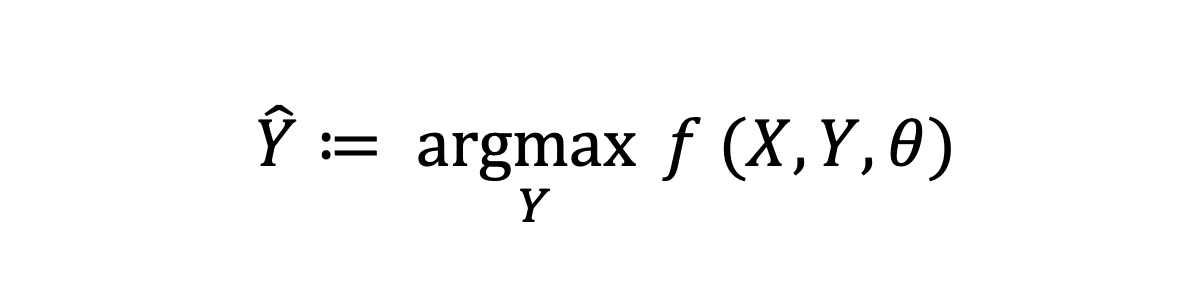
where
- f is a scoring function that specifies how well a candidate output Y fits X
- theta is a vector of parameters (usually numbers) that specifies the model
- y hat is the predicted output from the model
Aknazar Janibek
software developer from
almaty,
kz
aknazar.janibek@gmail.com